Aston Martin Vulcan at Full Voice
A closer look at Aston Martin’s track-only Vulcan, a 24-car study in naturally aspirated power, carbon-fiber theatre, and disciplined excess.
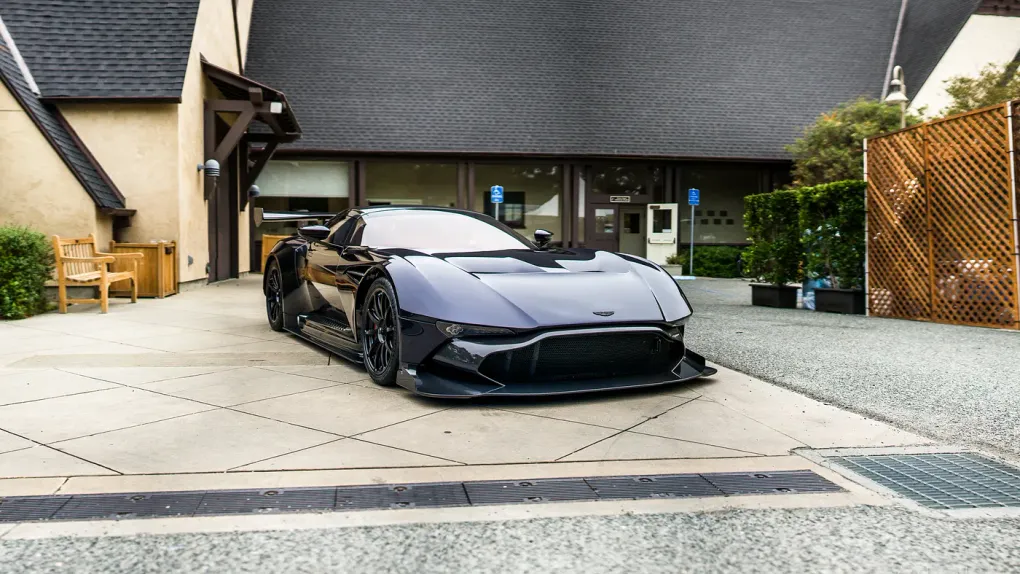
The Vulcan belongs to a brief, vivid moment when the top tier of performance cars had not yet surrendered entirely to hybrid logic, touchscreen polish, or road-use compromise. Aston Martin built only 24, and each one feels less like a product than a declaration.
Revealed in 2015, the Vulcan was conceived as a track-only Aston Martin with none of the apologetic language that usually accompanies such a project. It uses a front-mid-mounted 7.0-liter naturally aspirated V12, sends a little over 800 bhp to the rear wheels through a six-speed Xtrac sequential transaxle, and wraps the whole argument in carbon fiber. Even among low-volume collector machinery, it is unusually singular.
What makes the Vulcan compelling is not only the specification sheet, though that is formidable enough. It is the clarity of the brief. This is an Aston Martin stripped of touring manners and social ease, yet it still carries the marque’s sense of proportion, drama, and lineage. The One-77 is somewhere in its bones. So is the company’s long affection for large-capacity V12 engines. But the tone is entirely different. The Vulcan is less grand tourer than private track weapon, more test of nerve than expression of taste.
Form Follows Air
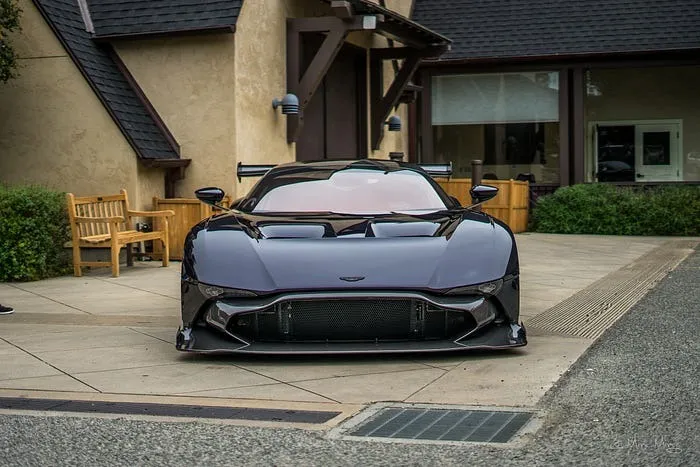
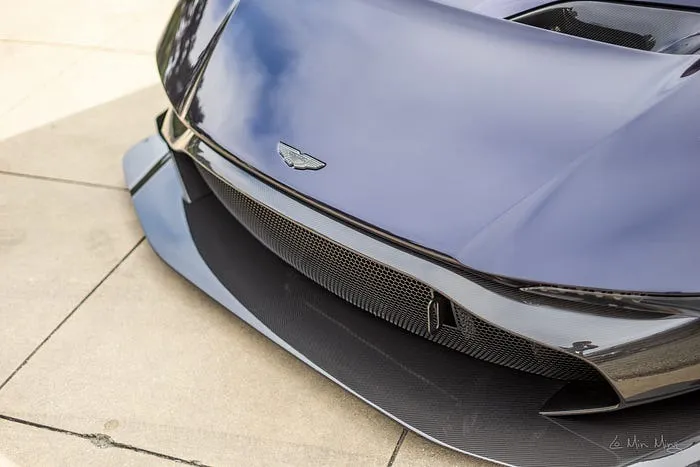
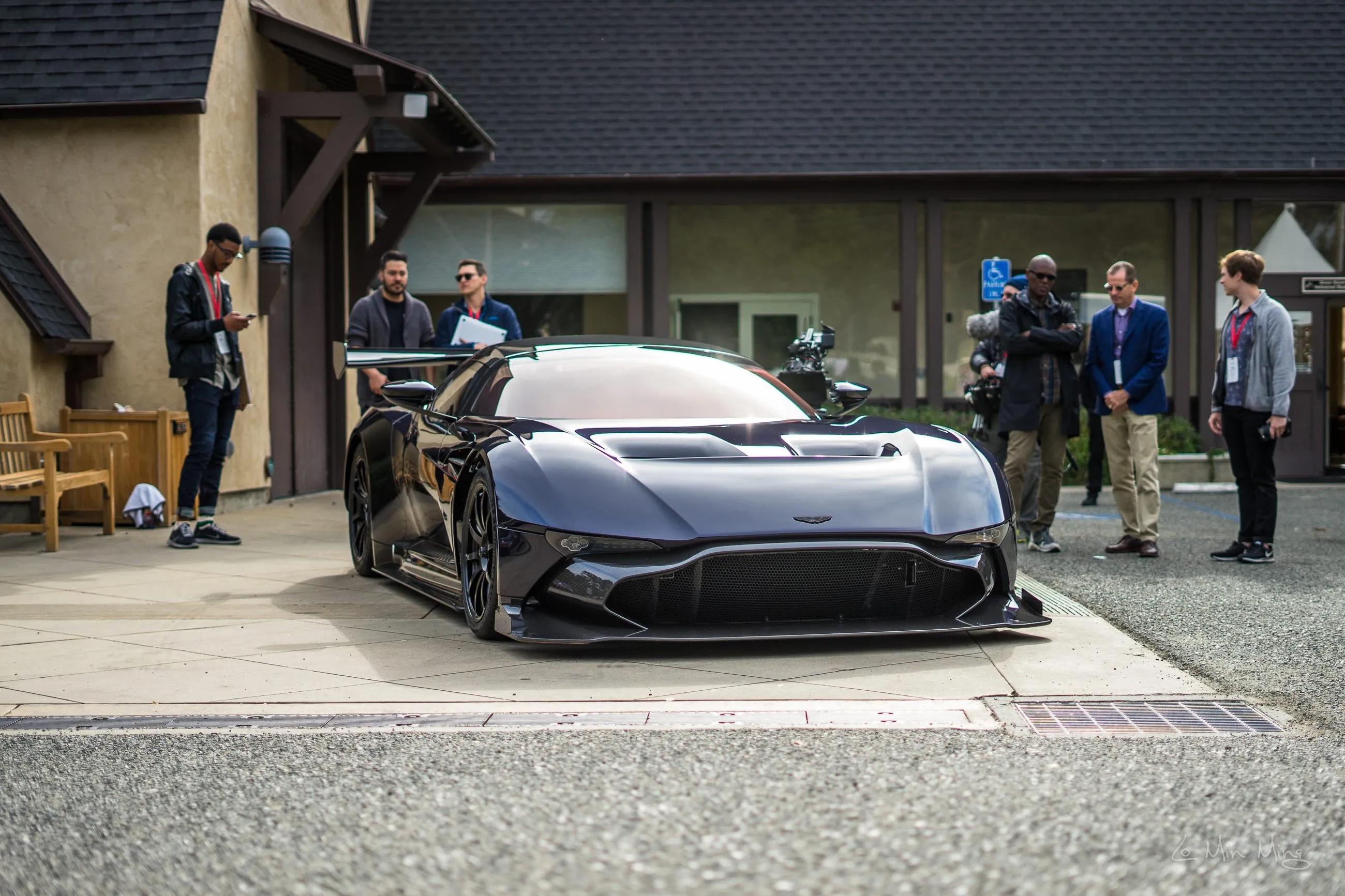
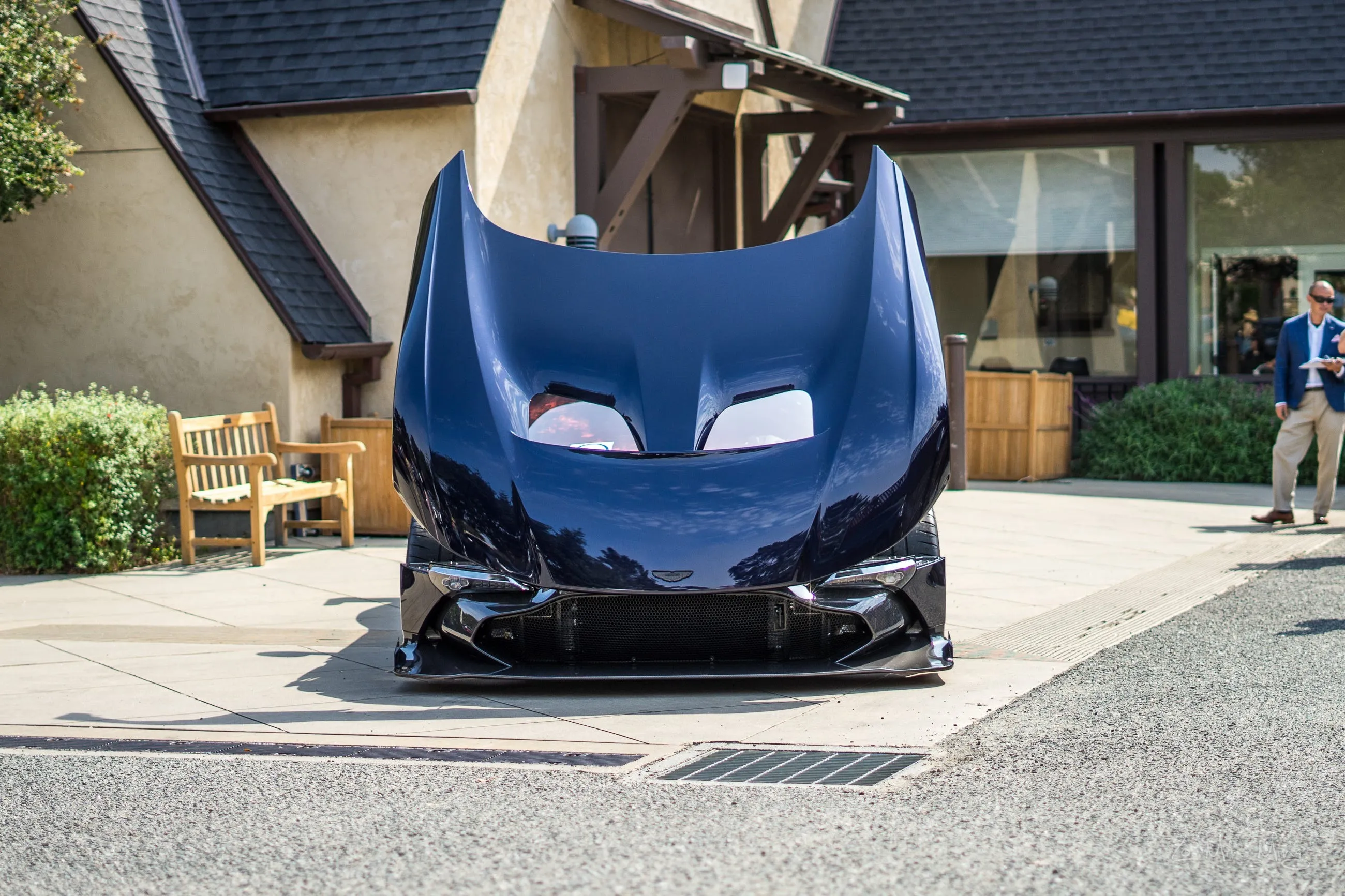
Seen in person, the Vulcan does not rely on decorative aggression. The shape is severe because it has work to do. The nose is cut low and hard, the splitter sits close to the ground, and the openings across the front fascia appear arranged by airflow first and styling second. Even the headlamps, with their narrow, almost interrogative look, feel more like tension lines than ornament.
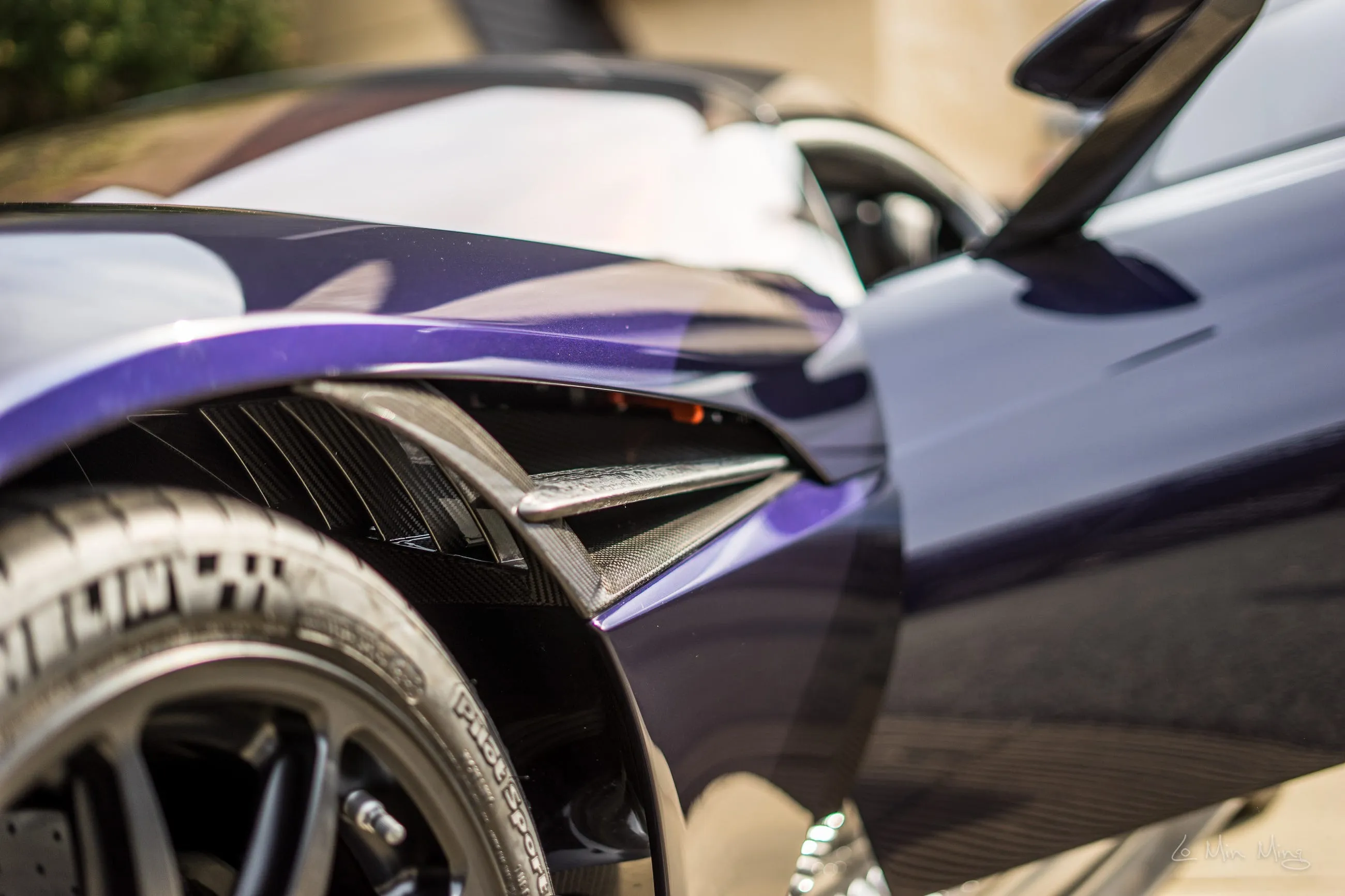
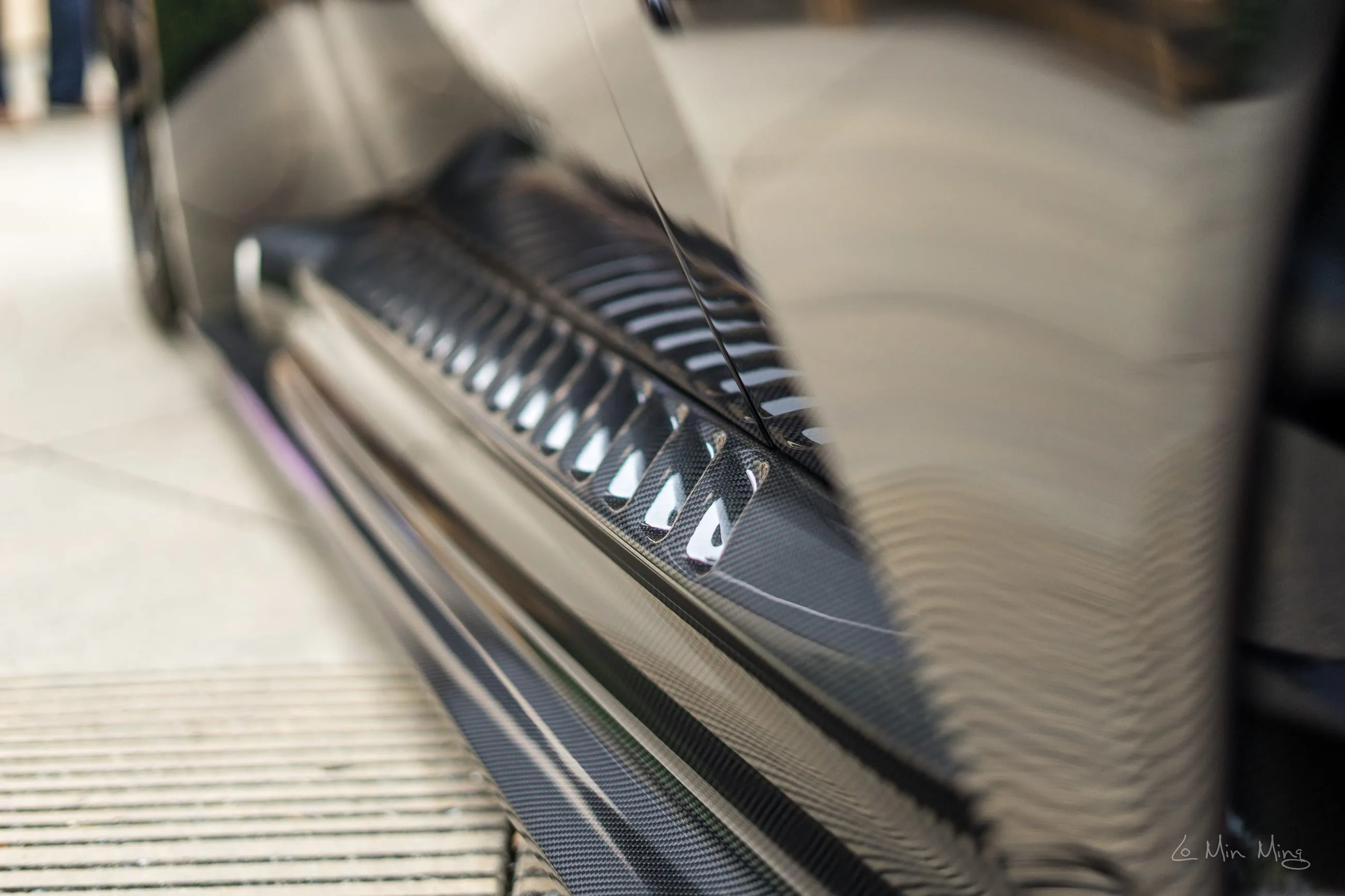
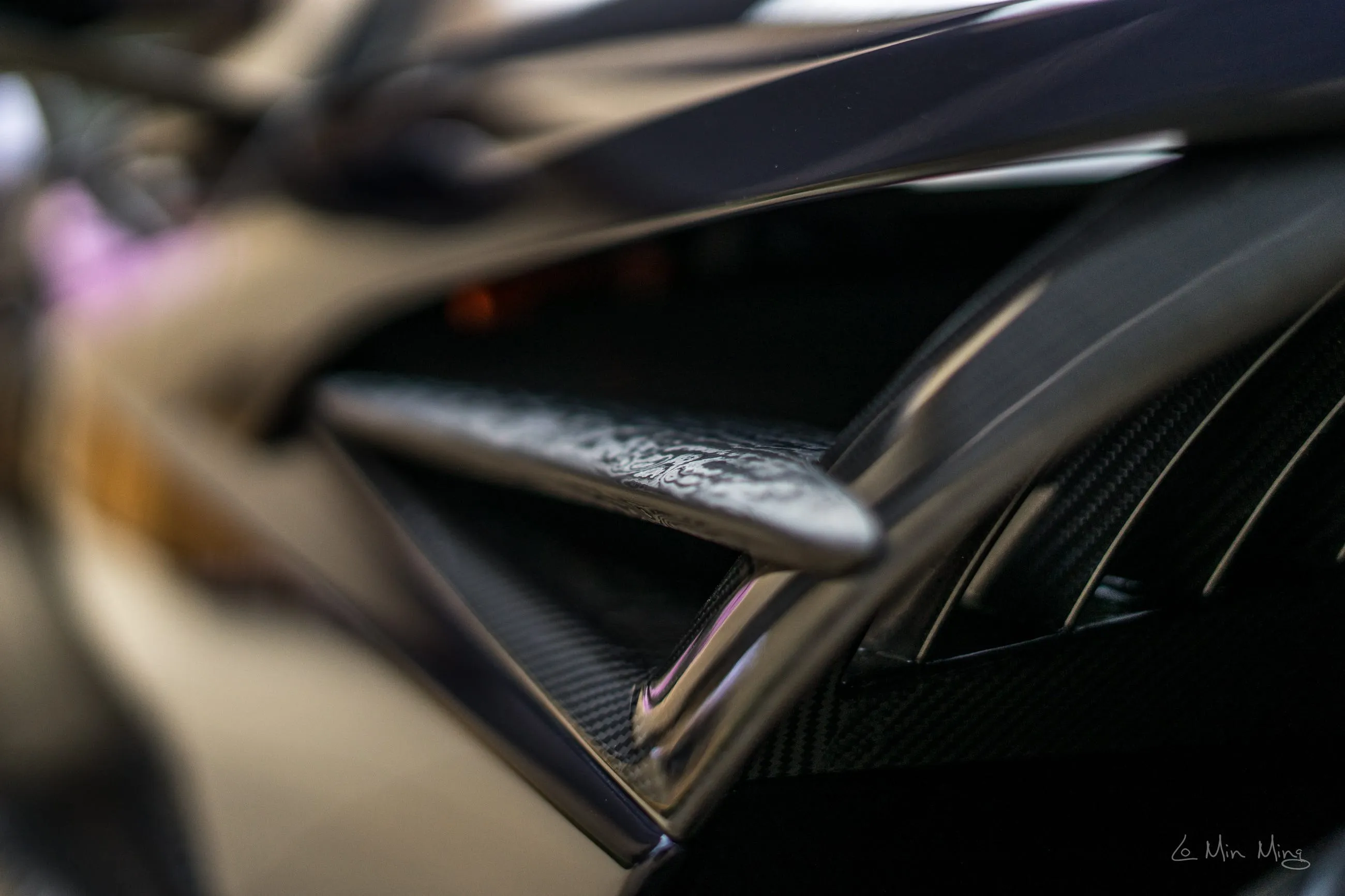
The bodywork is visually dense. Vents, louvers, channels, and cut lines are stacked into one another with very little blank space. Yet the car never loses coherence. Marek Reichman’s design team gave it the long-hood, cab-rearward stance one expects from an Aston Martin, then subjected that classic proportion to the demands of downforce and cooling. The result is theatrical, but not frivolous.
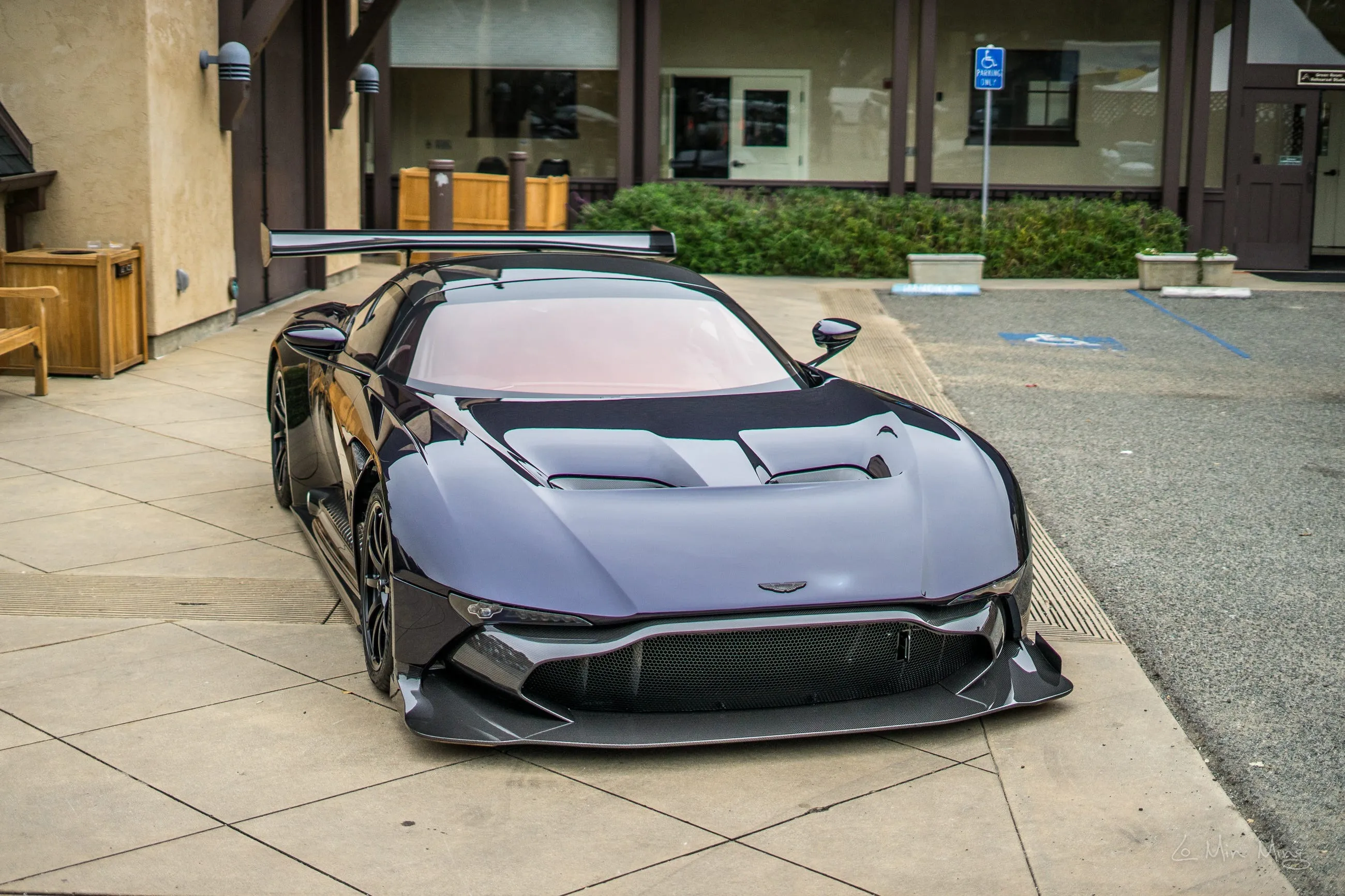
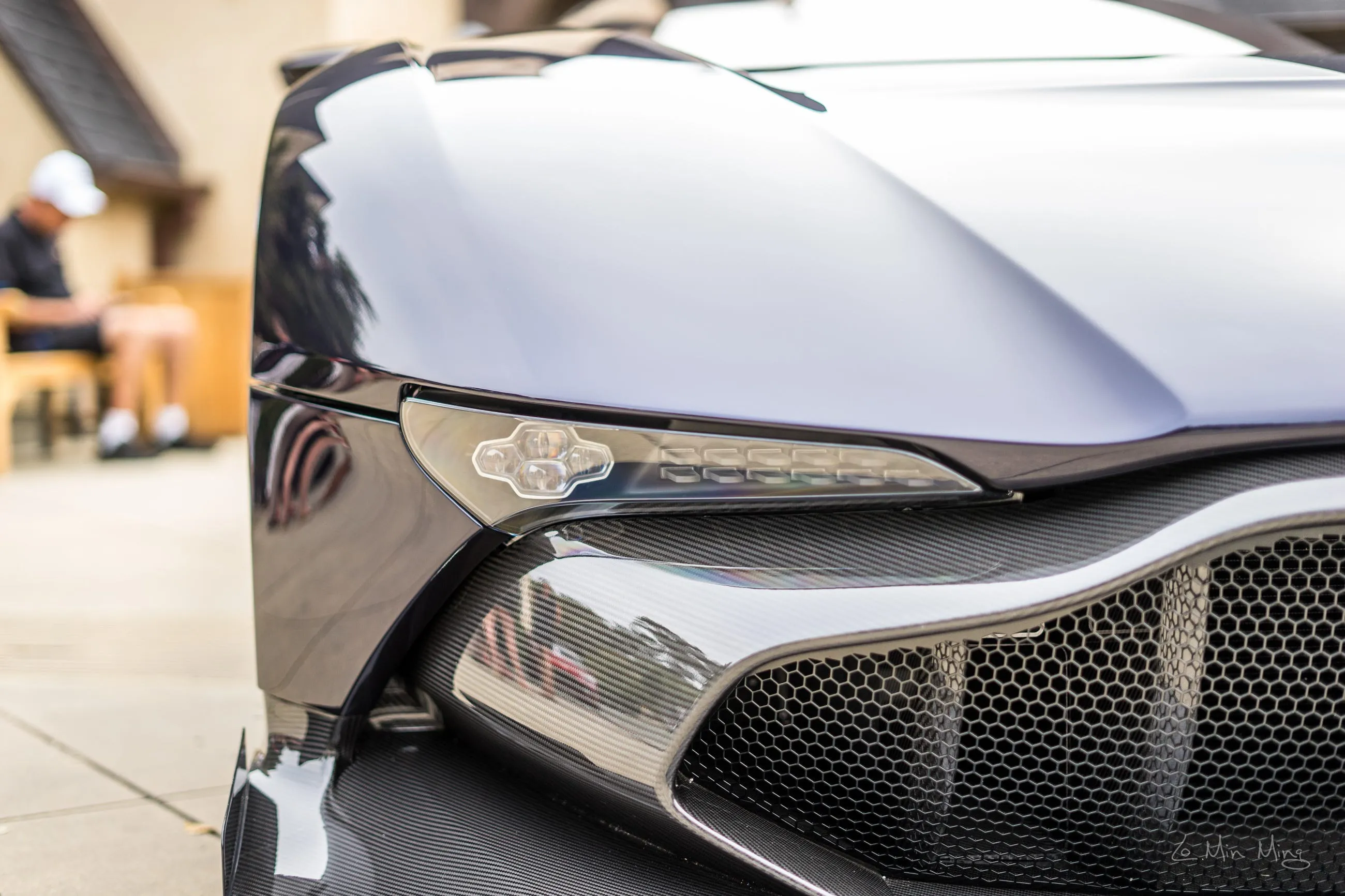
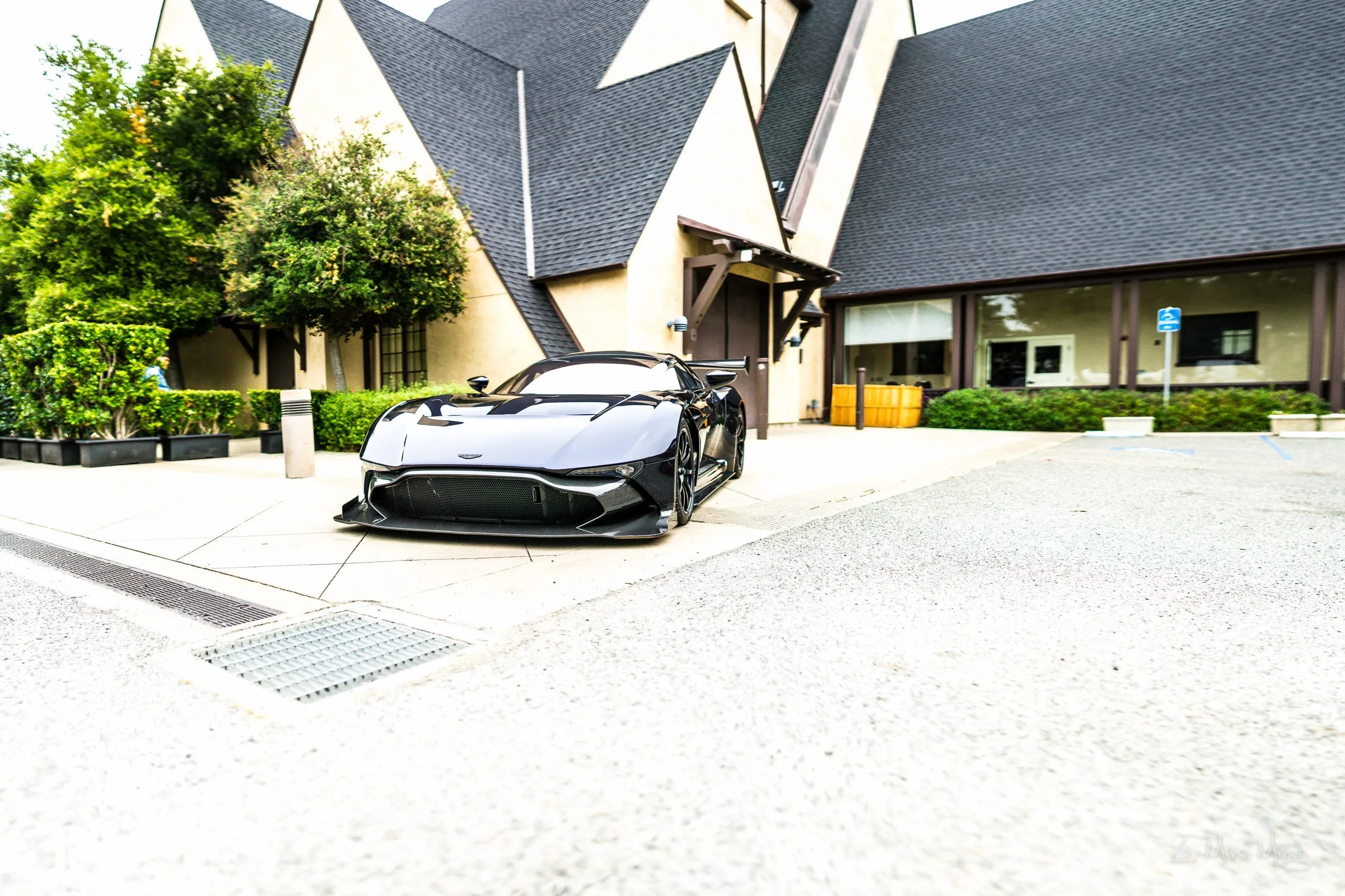
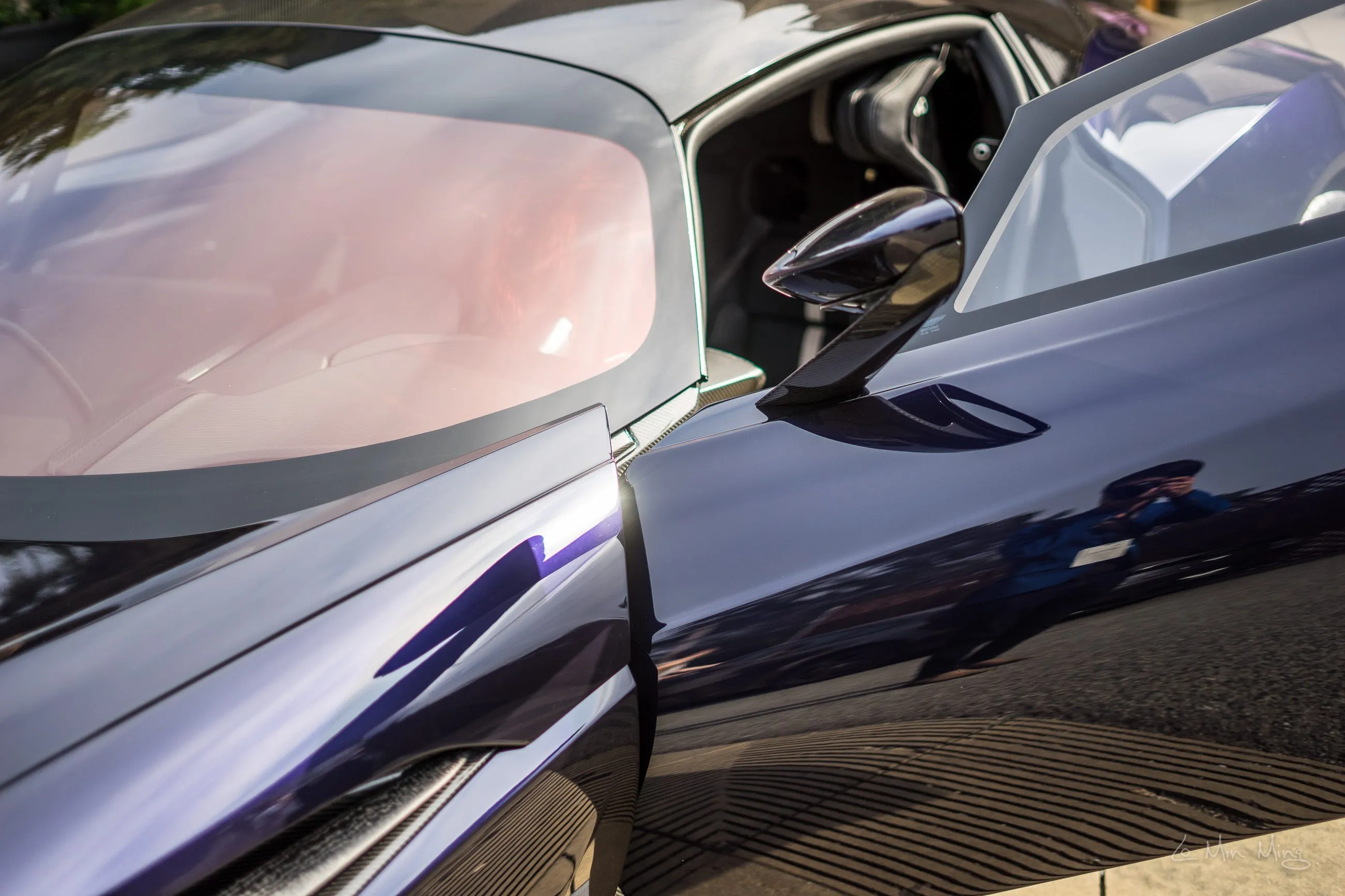
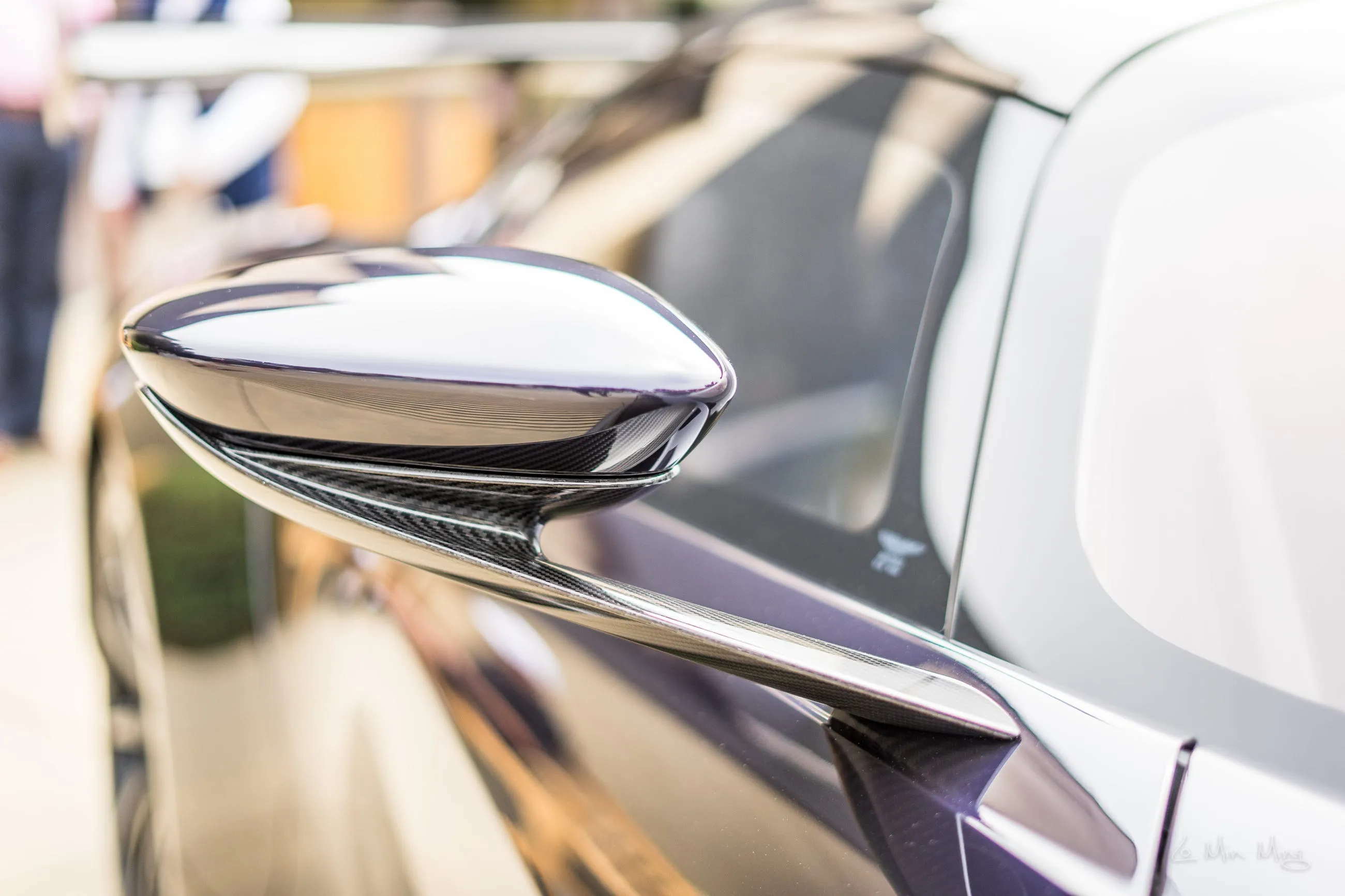
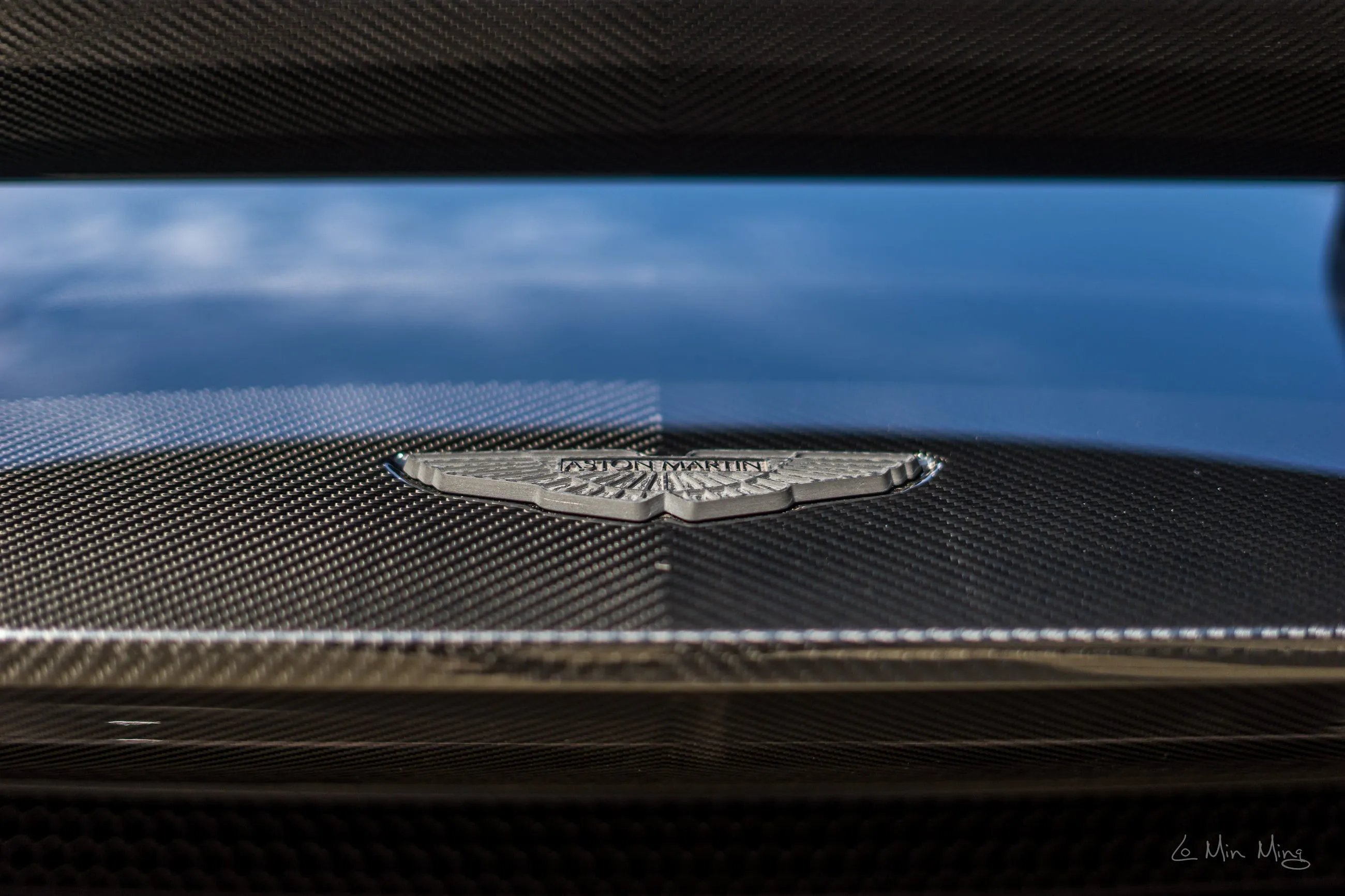
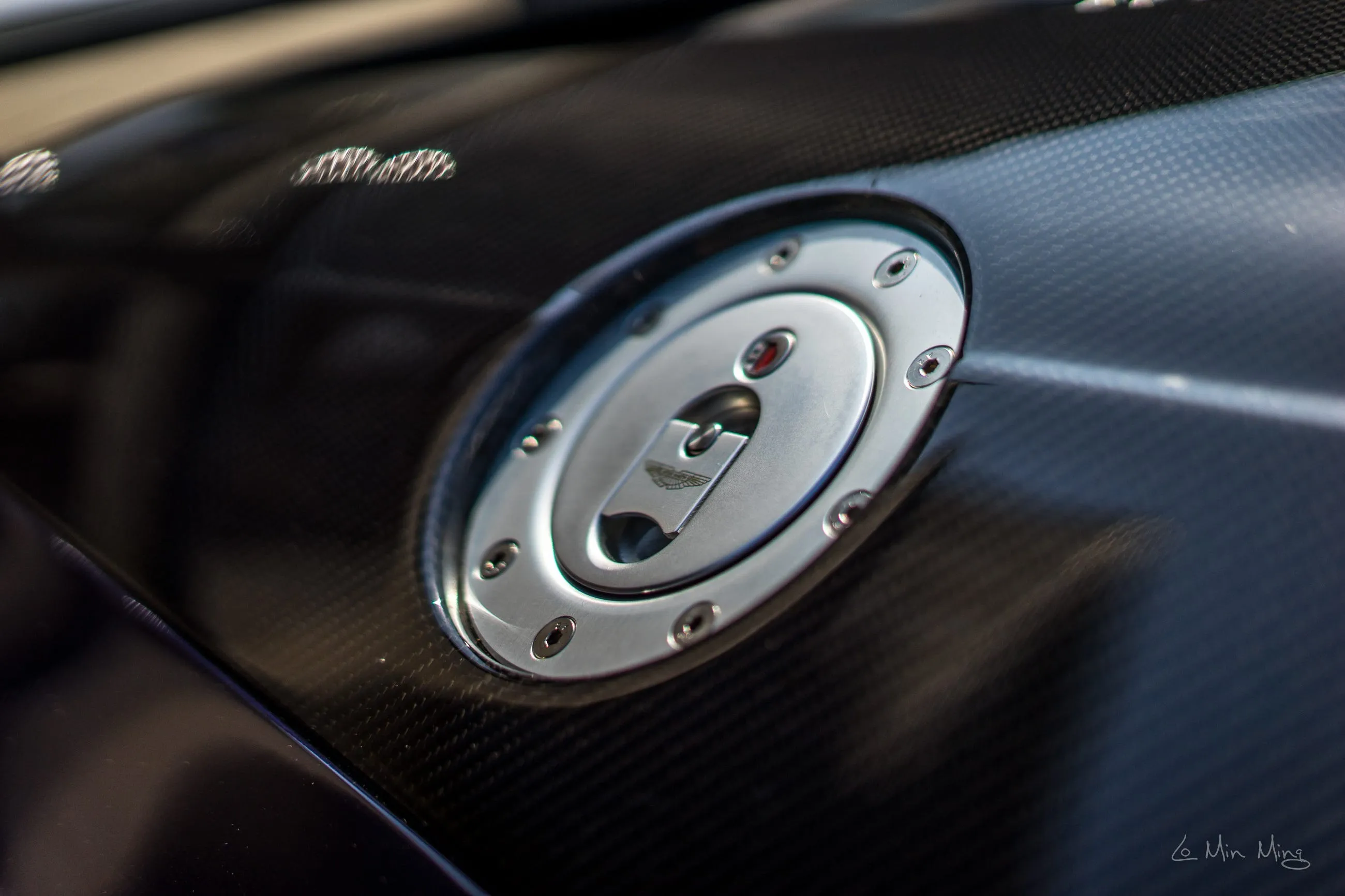
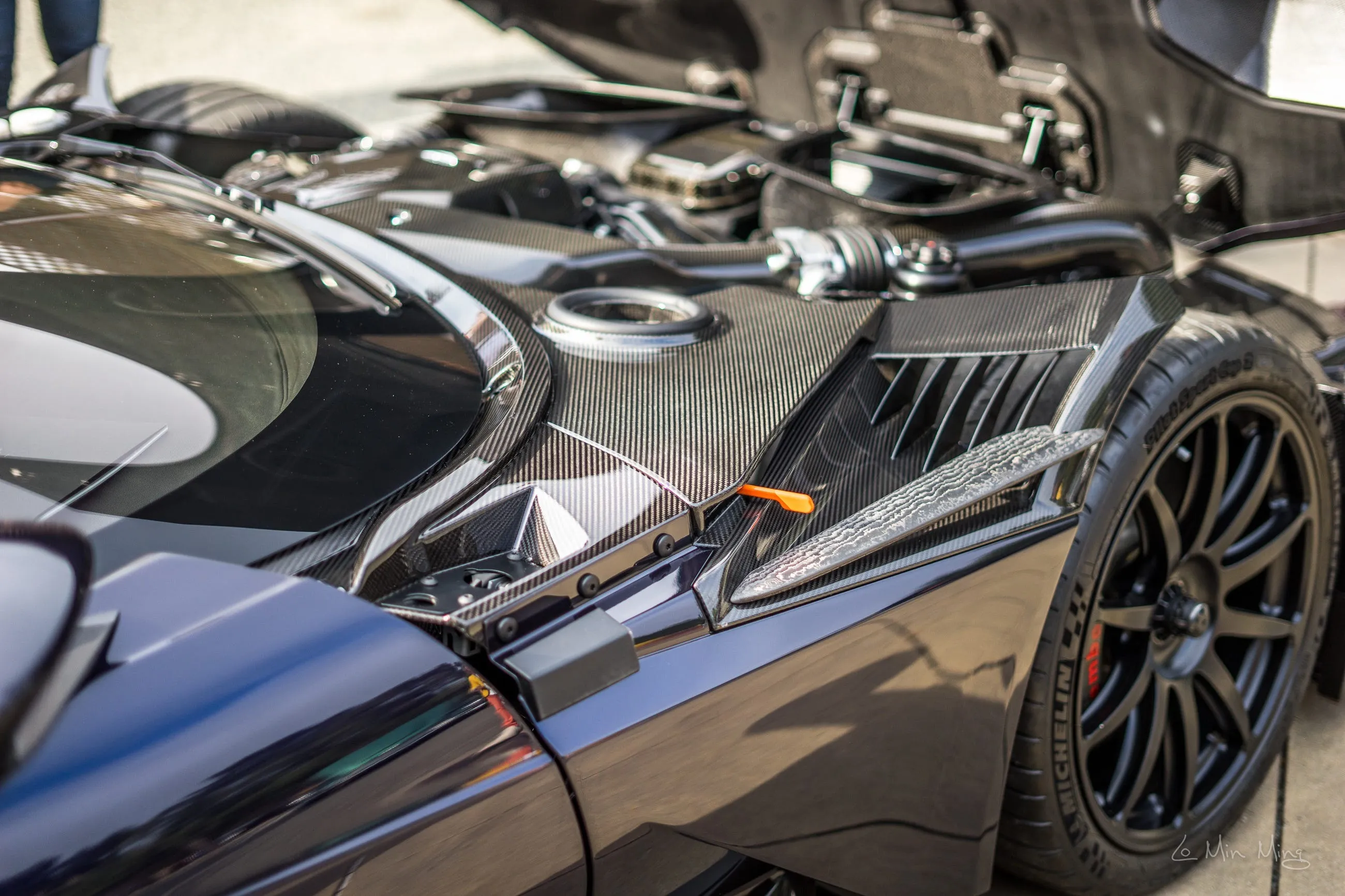
The details reward a slower look. The grille texture, the exposed weave of the carbon panels, the tight tolerances around the vents, the way the front arches hold the wheels with almost GT-racer economy: these are the things that separate an expensive machine from a considered one. On the Vulcan, surface drama is backed by engineering purpose.
A Cabin With No Interest in Comfort Theater
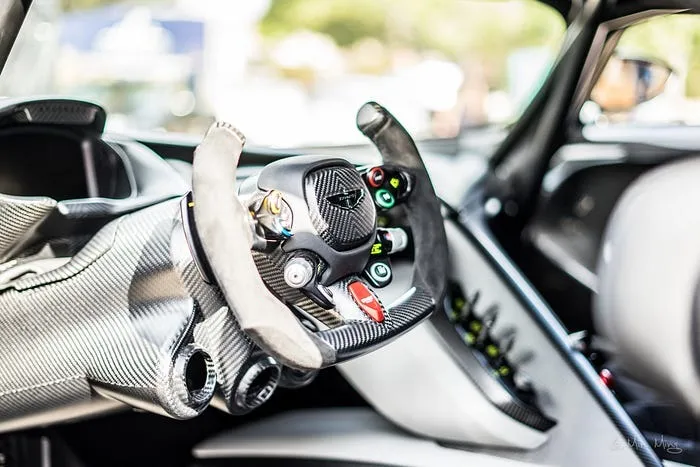
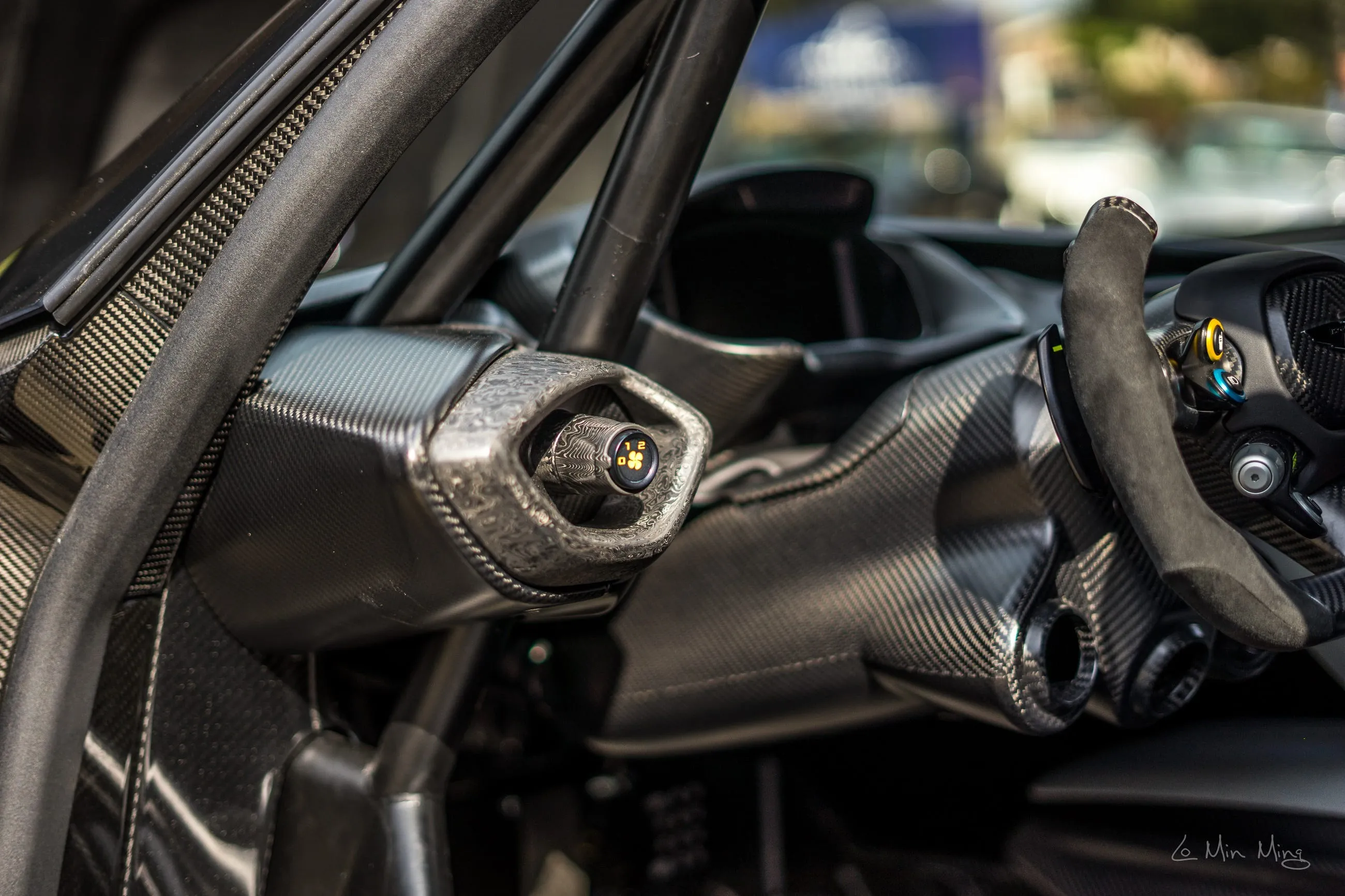
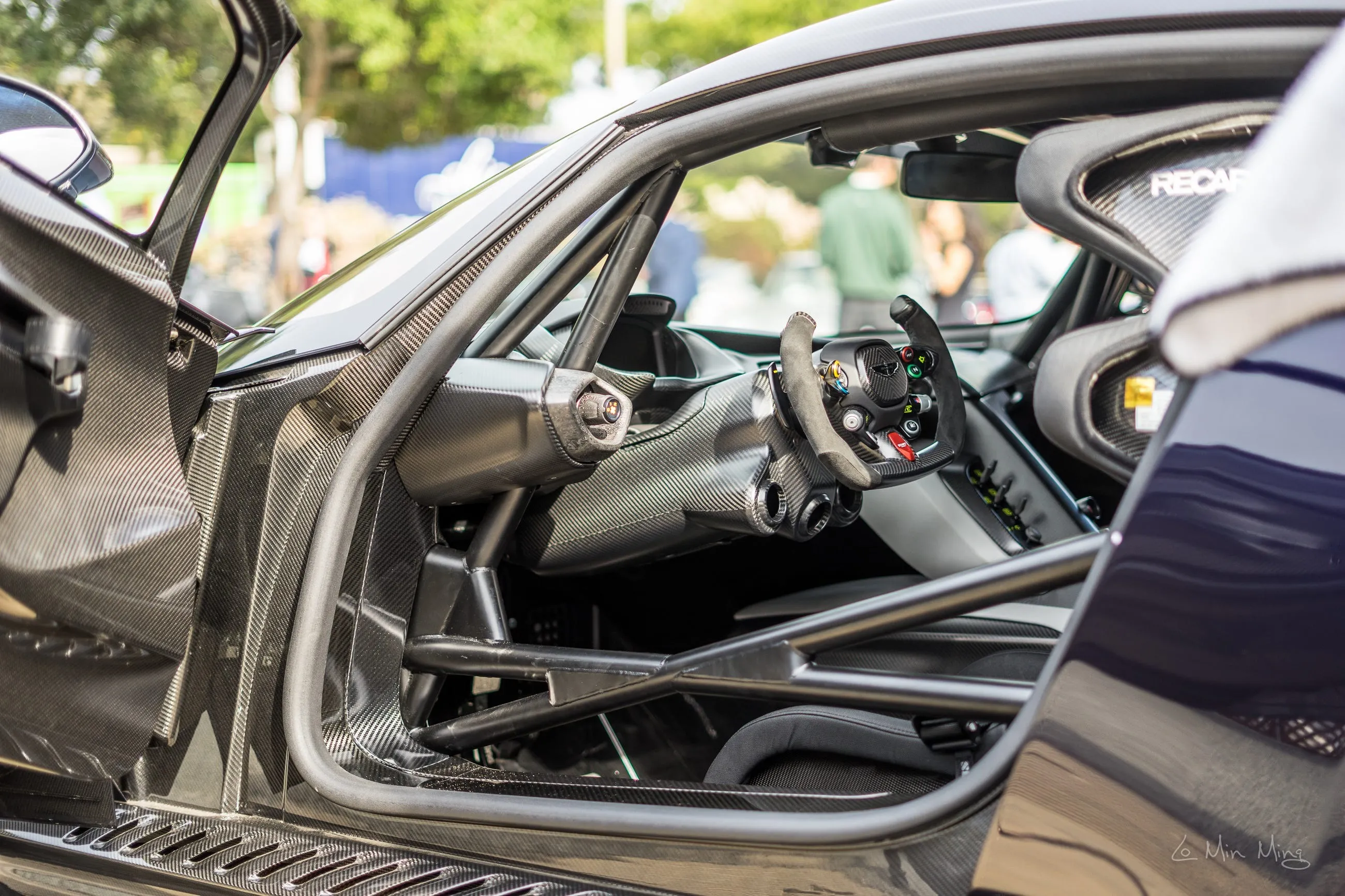
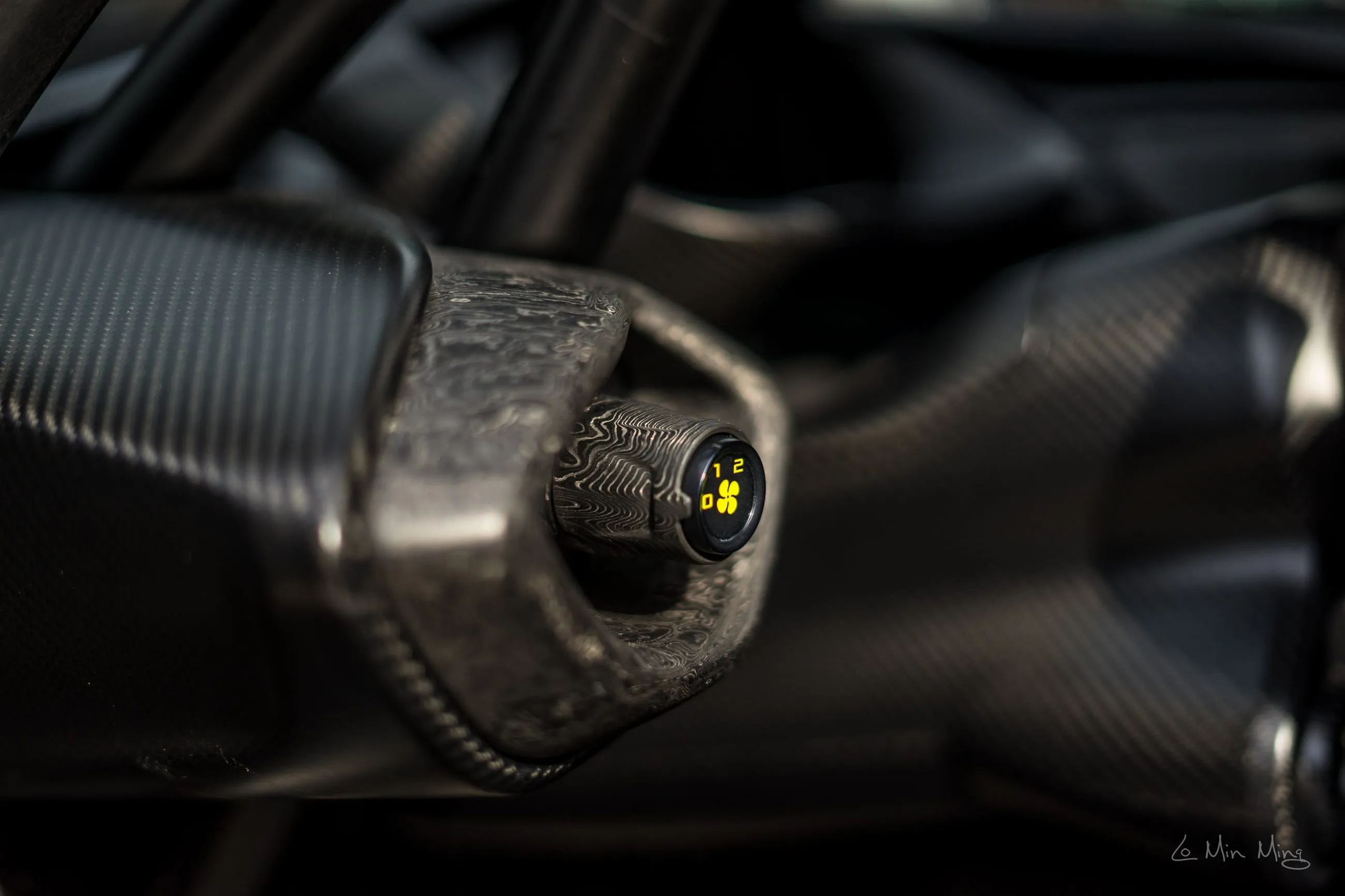
Inside, the car is disciplined to the point of austerity. Carbon fiber dominates the structure, controls are reduced to what matters, and the steering wheel borrows its language from contemporary competition cars. There is no attempt to disguise the cabin as a luxury interior in the conventional sense. The luxury here is specificity.
Seats are fixed, the architecture is exposed, and the switchgear feels placed for use rather than display. It is a cockpit that assumes the driver has arrived for a reason. That seriousness is part of the car’s appeal. Other seven-figure cars flatter their owners. The Vulcan expects concentration.
The Aston Rear End, Rewritten for the Circuit
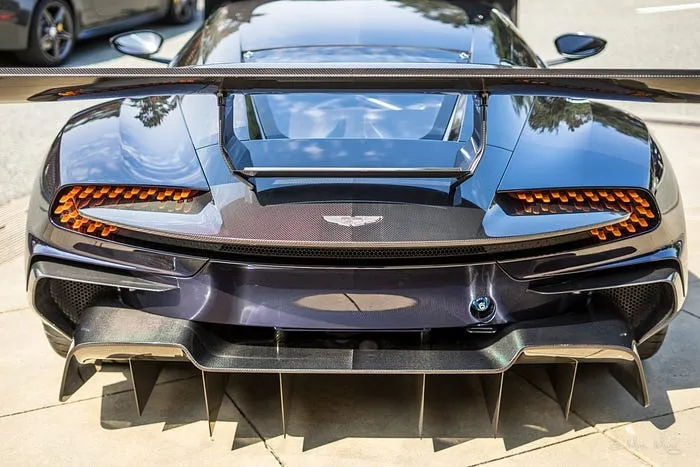
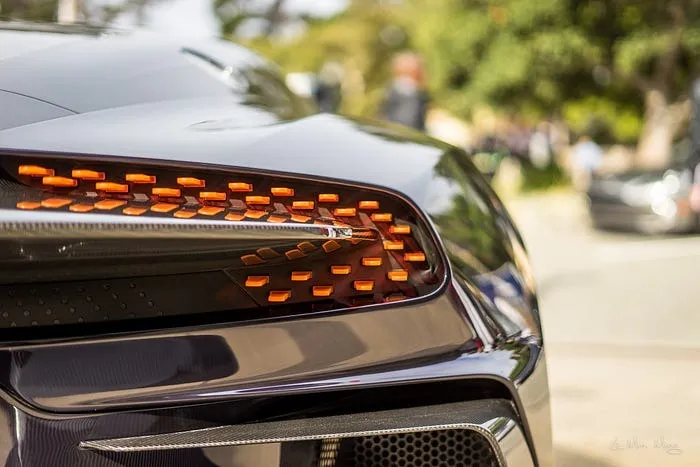
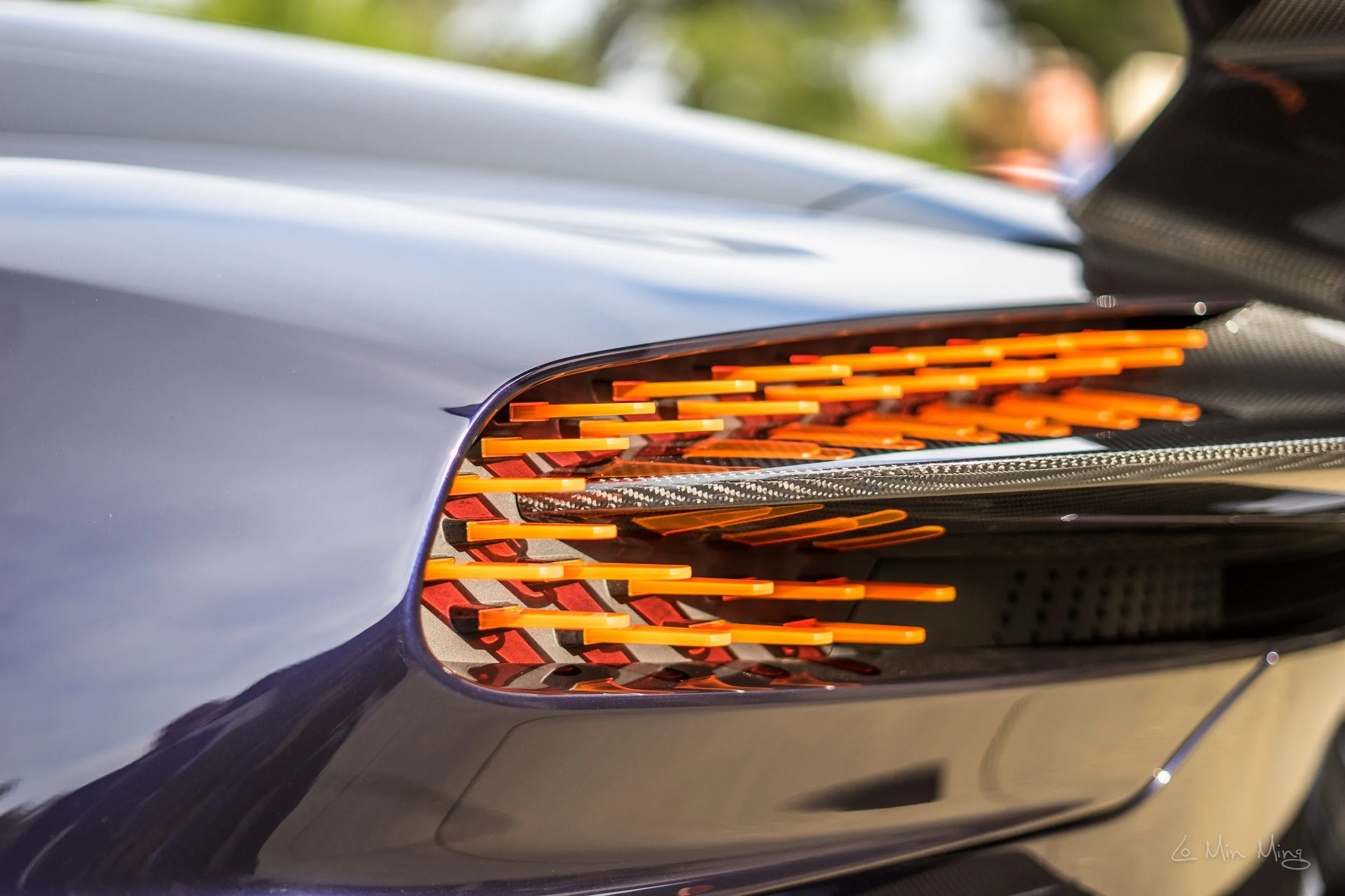
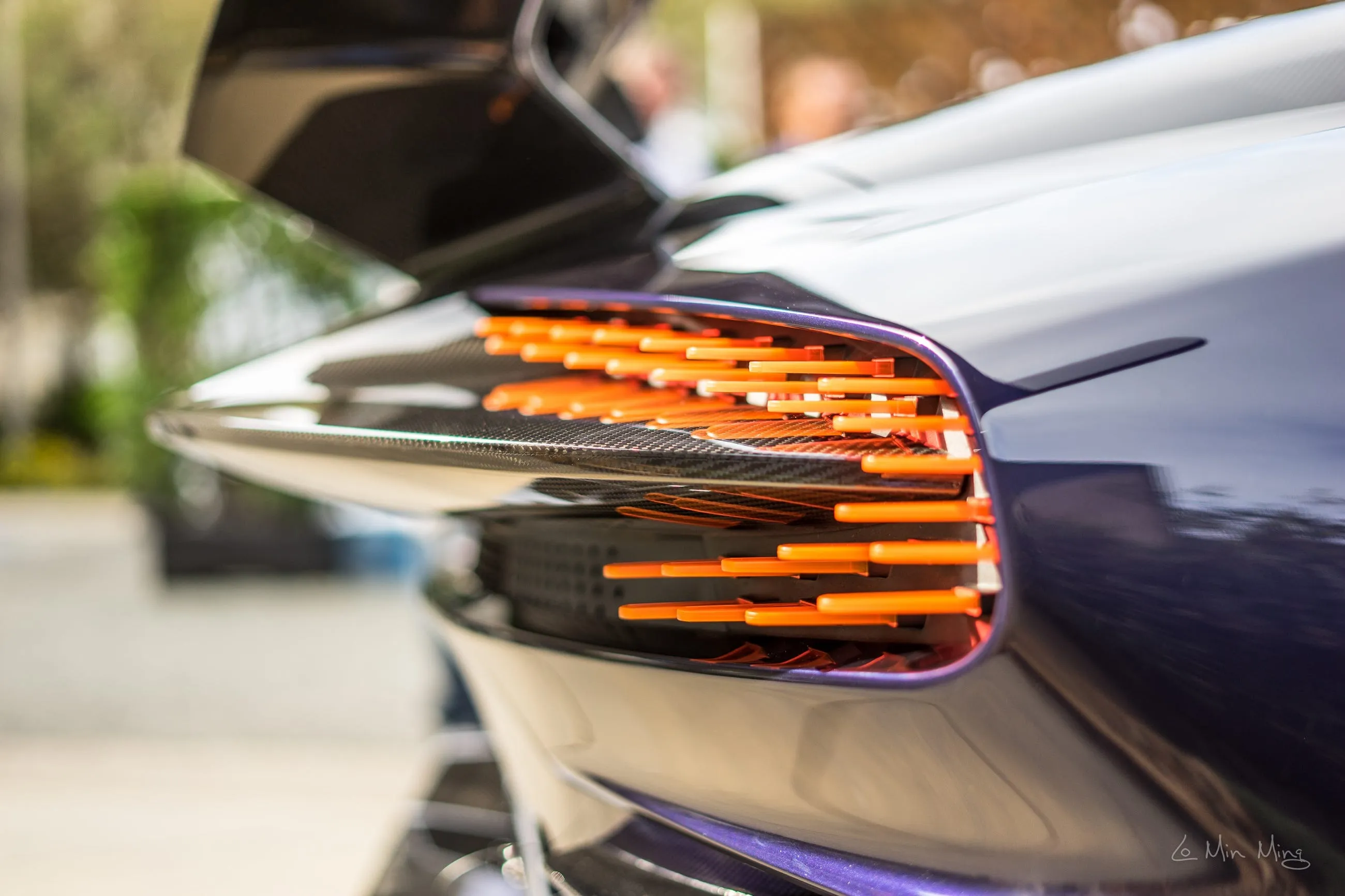
At the rear, the Vulcan becomes especially memorable. The light signature is reduced to narrow red blades, almost as if the lamps were drawn with a single stroke. Beneath them sits a diffuser of serious intent, above them an adjustable rear wing large enough to settle any question about the car’s priorities.
This is where the Vulcan moves furthest from Aston Martin’s road-car vocabulary. There is still elegance in the taper and the shoulder line, but it has been overtaken by aero load, extraction, and stability. The tail looks engineered under pressure, which is precisely why it works.
The Last Great Naturally Aspirated Aston Extremist
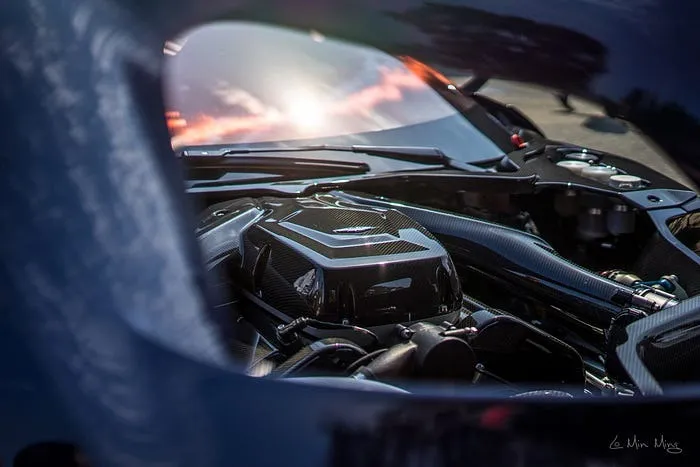
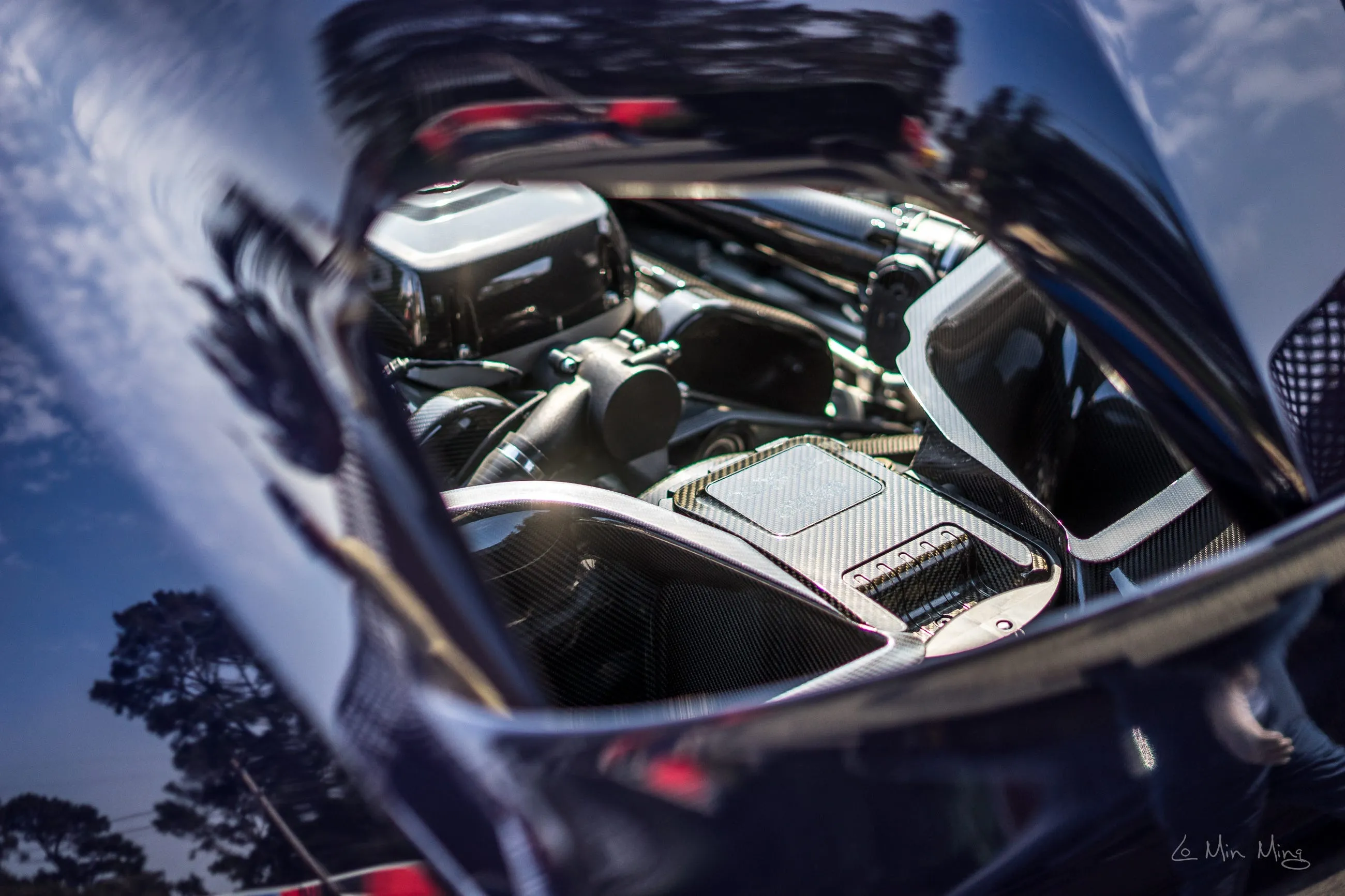
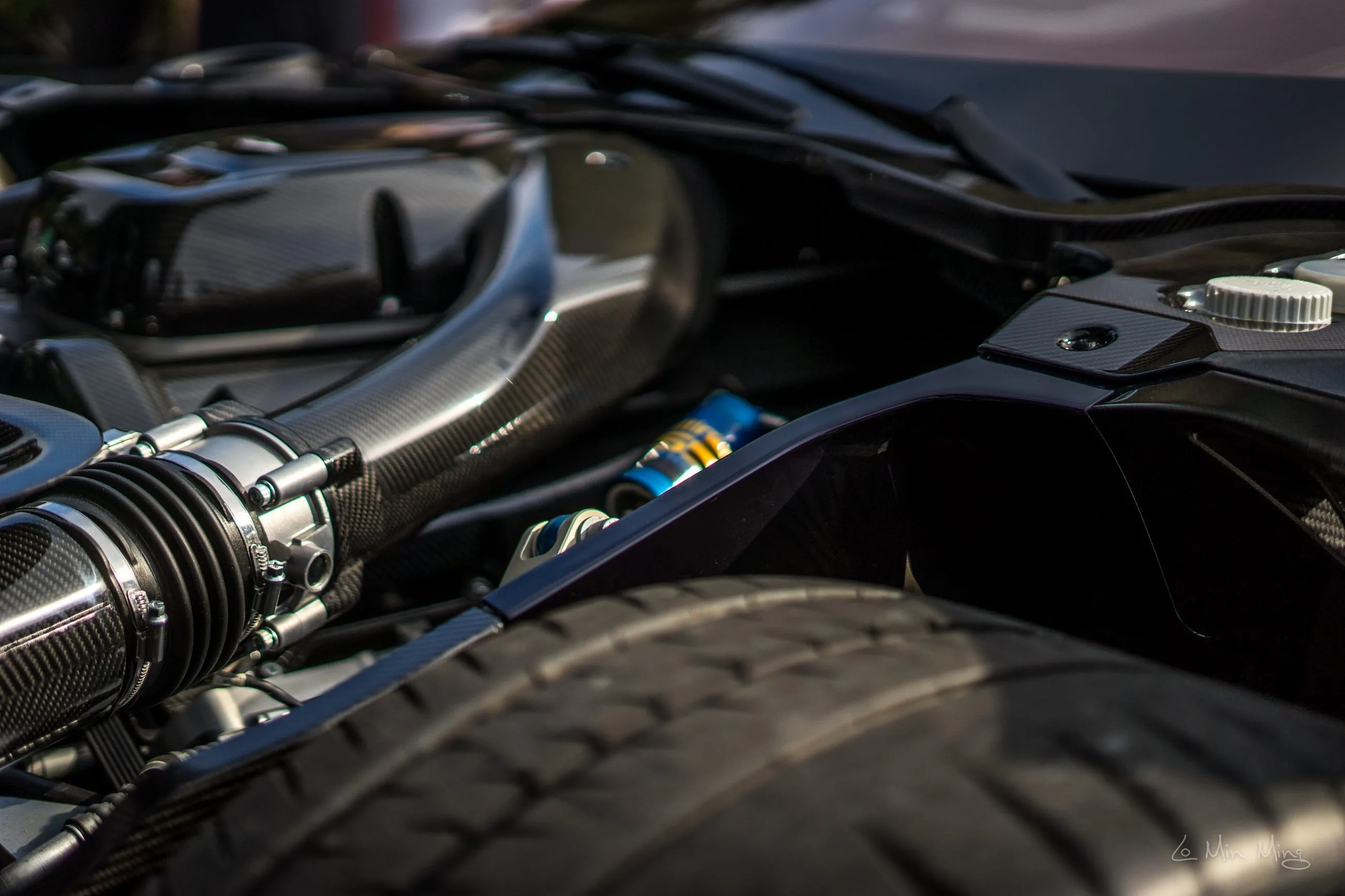
The center of the story remains the engine. Aston Martin gave the Vulcan a 7.0-liter V12, naturally aspirated and unapologetically old-school in temperament. In an era already leaning toward electrified assistance and forced induction, that choice now reads as both stubborn and farsighted. The car’s importance has only grown as the industry has moved away from this kind of powertrain.
Numbers matter here, but character matters more. A large-capacity Aston V12 has a particular sense of scale to its delivery: not peaky, not synthetic, not filtered. In the Vulcan, that familiar architecture is sharpened into something far more exposed. The sequential gearbox, rear-drive layout, and track calibration remove the civility that usually surrounds the brand’s twelve-cylinder cars.
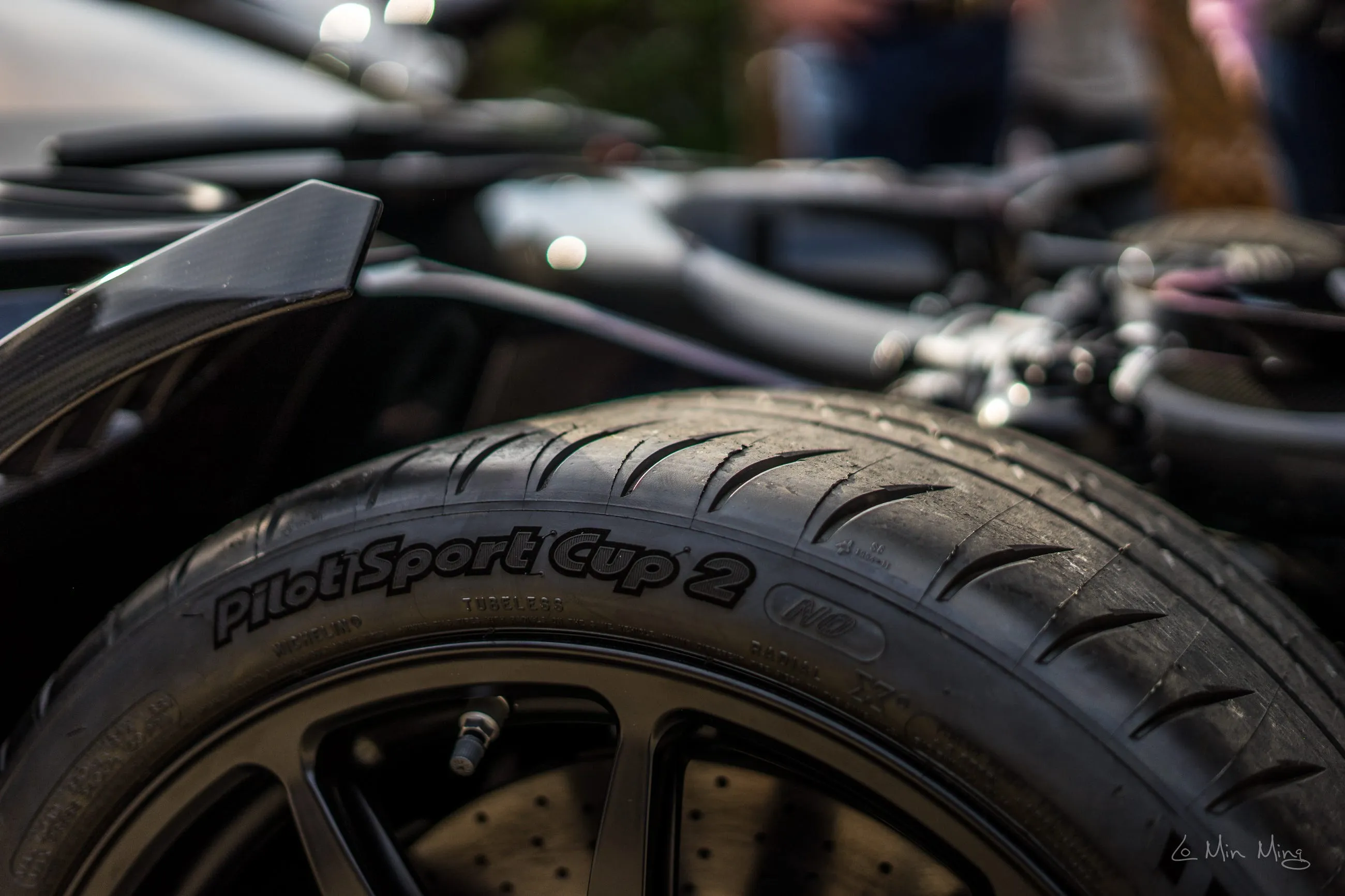
The engineering beneath the body is equally serious. Carbon-ceramic brakes, race-derived suspension, center-lock wheels, and a carbon-intensive structure give the Vulcan the hardware of a contemporary competition car without severing it completely from Aston Martin’s design culture. Buyers were not simply handed the keys, either; the car was paired with a structured factory driver development program, which says much about its capability and its intended audience.
Why It Matters Now
Collector interest in the Vulcan is not difficult to understand. Rarity helps, of course, and a production run of 24 guarantees scarcity. But scarcity alone is never enough. The Vulcan has a stronger claim because it captures Aston Martin at an unusually uncompromising extreme: before the Valkyrie rewrote the brand’s upper limits, after the One-77 proved the company could still build an object of true consequence, and at the closing edge of the naturally aspirated era.
It is also a car with presence beyond the circuit. The Vulcan photographs well, but it is more convincing in person, where the scale of the bodywork, the intricacy of the aero surfaces, and the starkness of the cabin all register at once. One sees not just expense, but intent.
For a marque associated as much with civility as speed, the Vulcan remains a fascinating outlier. It is not beautiful in the easy way an Aston Martin often is. It is better than that. It is exacting, rare, faintly unruly, and entirely sure of itself.